The game of hockey at the highest level has never been played as fast as it is today. It’s undeniable. In order to survive in the NHL, or the Olympics, skaters have to keep up the entire length of the ice surface and have an element of quickness in small areas.
Considering that, there’s one player on Canada’s men’s Olympic hockey team who can stand out for how he does not perfectly fit that description.
Mark Stone approaches the game with his own unique style, and he does it without quickness or the open ice speed other players on his team possess.
What’s fascinating about Stone’s approach to the game is the fact his below average foot speed doesn’t negatively affect the impact he has on either side of the puck. Stone is an outlier, but he makes up for it with his elite hockey sense and the routes he takes to plays in all three zones.
Here’s a look at why Stone is on Team Canada, and what makes his game tick.
He’s a complete player
Stone has missed some time with injury this year, but the stats speak for themselves:

Stone is deployed in all situations for the Vegas Golden Knights. He would likely be leading the team in scoring if not for the fact he has played nine fewer games than Jack Eichel and he’s easily out-paced Mitch Marner with a 1.46 points per game average.
Stone is tied for the team lead with his plus-18 rating and trails only Eichel in average time on ice. He and Eichel log the most average time on the penalty kill amongst the Golden Knights’ forward group.
How his foot speed compares to other NHL players
Noting that Stone is a complete player who can be trusted in a variety of roles, analyzing his speed metrics unearths some fascinating results compared to the rest of the skaters in the NHL.

Stone is well below the 50th percentile in all skating categories. It might not seem like a massive difference, but when a skater is tracking half a mile per hour slower than his peers in average max skating speed it should mean he is chasing the play more often than not.
Here’s how Stone’s overall speed compares to John Tavares and David Perron, both of whom aren’t considered fast by NHL standards:

How he overcomes a lack of speed with hockey sense and smart routes
Considering what I have revealed above, including how Stone is deployed and his statistical impact in relation to his skating speed, it begs the question: How does he make up for his lack of foot speed to generate these results?
The answer lies in the sequence of clips I’m about to present below.
Stone has elite hockey sense. He reads how plays are developing in the defensive zone, gets in shooting lanes on time to intercept pucks, and has a great stick. He’s also very proficient at finding “quiet ice” in the offensive zone, which leads to high-danger scoring chances that he usually capitalizes on. Stone also has exceptional hand/eye coordination. Pucks are on and off his stick in a flash, making him very difficult to defend.
This first clip displays the route Stone takes in the defensive zone while on the penalty-kill. He doesn’t stop moving his feet in his quadrant and ends the sequence with a shot block, zone exit, and timely line change. Stone isn’t the kind of player who will milk a shift for an extra 10 or 15 seconds. He knows his limitations and fatigue threshold and adjusts to the scenario in front of him to get off the ice before he runs out of gas:

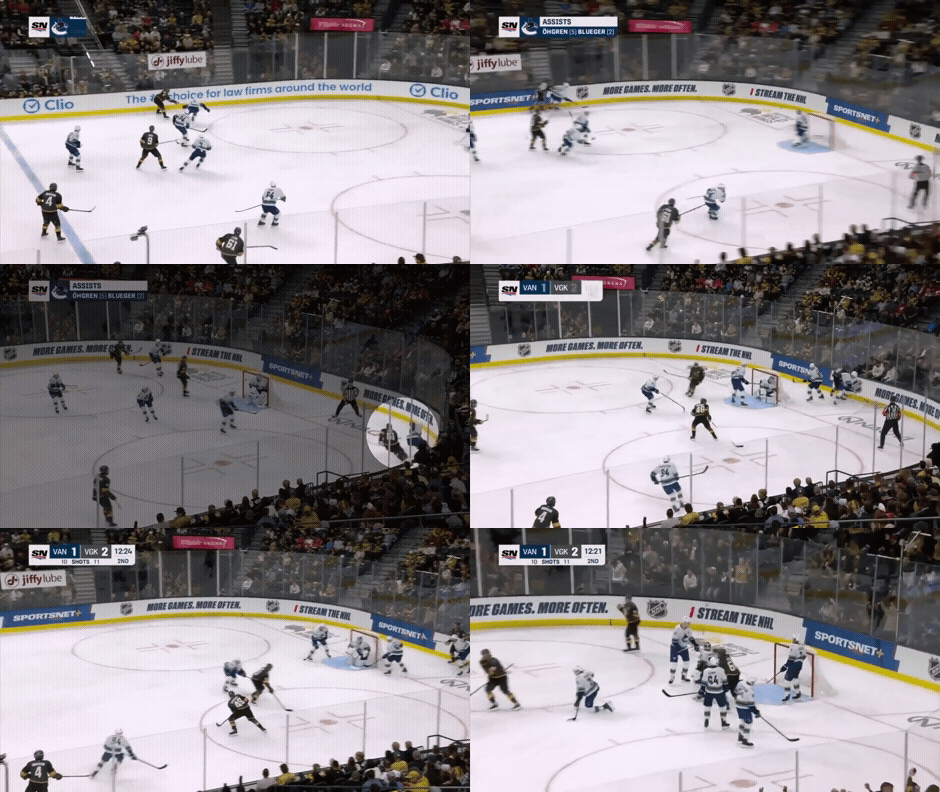
In this next sequence, Stone presses up ice after the puck is chipped to his strong side corner and positions very well. He seals the wall and guides the Vancouver defender behind the net. Stone then retreats above the play.
At this point he’s in position to either support defensively if the puck spills out of the Canucks zone, or pounce offensively if the puck works itself out to the deep slot.
Once the puck ends up on Stone’s stick, he makes a sneaky-quick play to Ivan Barbashev, who snaps a shot into the back of the Canucks net:
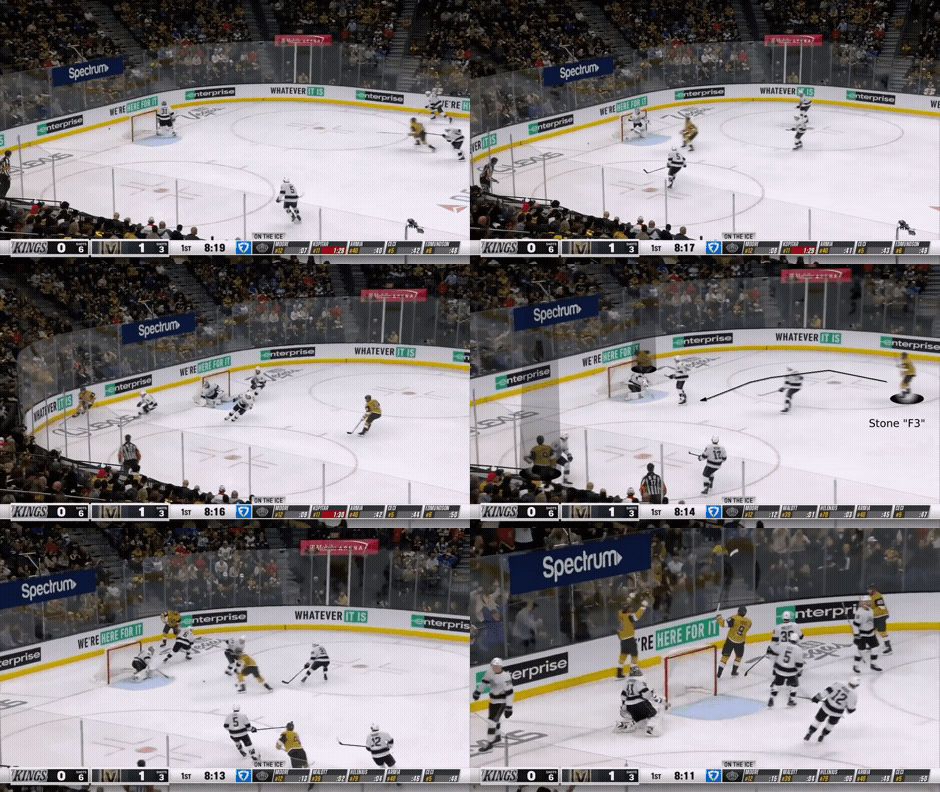
The last clip I’ll highlight takes some time to develop, but it shows how connected Stone is with his linemates.
Eichel provides up-ice speed as the first forechecker on the puck. He attempts to make a play to the net to Barbashev.
By the time the puck ends up below the goal line, Stone has taken his time entering the fray off a line change and works to identify where the open ice is in front of the LA Kings’ net.
Stone finds quiet ice and ends up kicking the puck from his skate to his stick before quickly depositing it into the Kings net. It’s another example of Stone’s elite ability to find open space and make a quick and nifty play before opponents have a chance to engage him defensively.
Why Mark Stone is on Team Canada
To impact today’s NHL game, players have to be able to keep up with the pace, display reliable hockey sense on and off the puck and provide a relentless work ethic.
Stone has never been the quickest or fastest skater, but his combination of elite hockey IQ and enthusiastic and competitive approach to the game leads to significant impact. He leads by example and provides consistent results.
The shorthanded goal he scored against France showcased several of the skills I mentioned above. He had good defensive positioning at Canada’s blue line, made a strong stick check on the attacking France player, and he smartly shielded the puck with his body as he slowly made his way down the ice, before flipping a sneaky backhand past the goaltender.
Stone is a complete player. He’s adjusted to the speed of the NHL game and has the unique ability to outsmart his peers. He’s an outlier on many levels but a massive contributor offensively and defensively nonetheless… even on the Olympic stage.